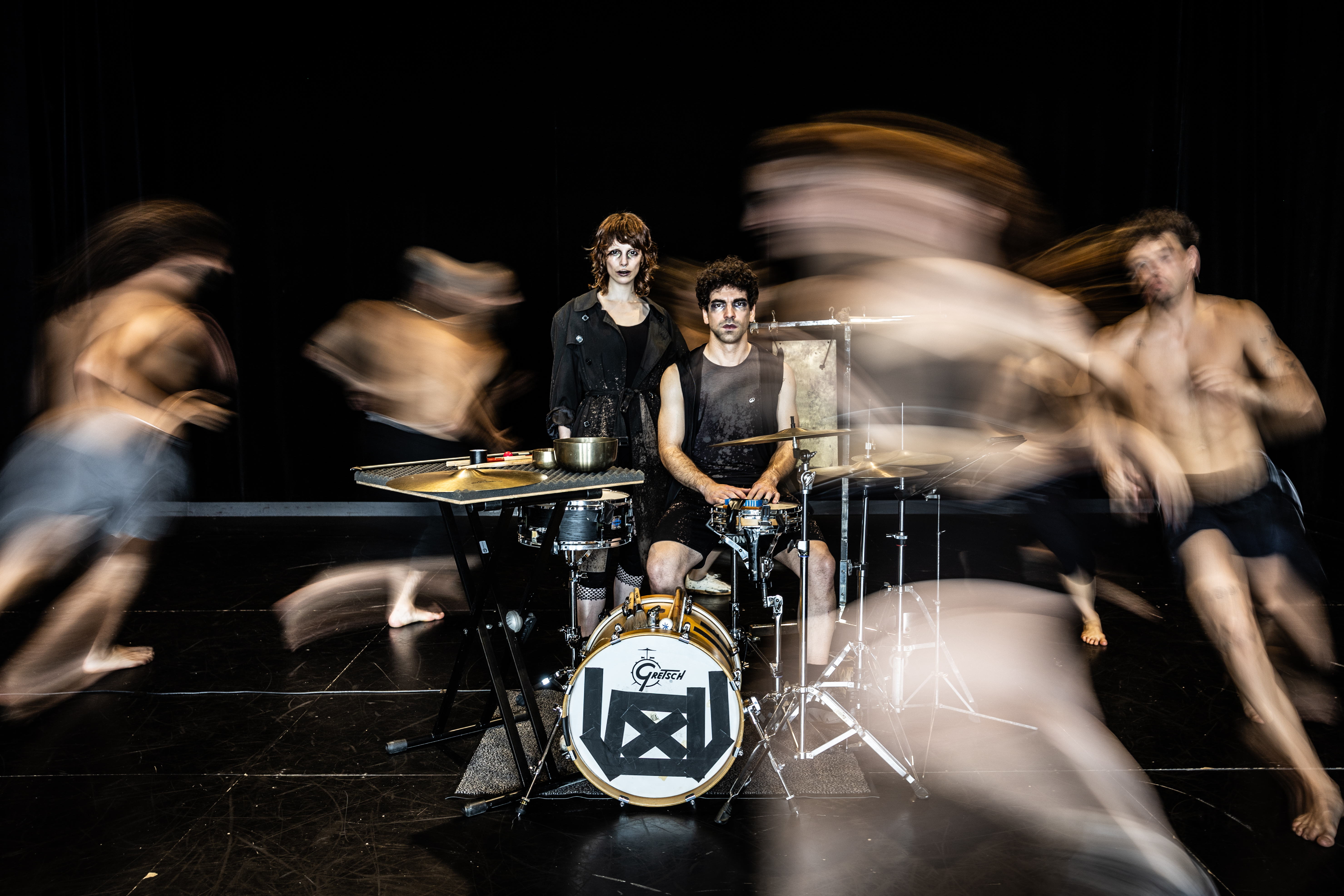
Esta hora de espanto
Para Esta hora de espanto, escreve Tiago Mesquita Carvalho: “Passa caudaloso o rio da história e nele todos mergulham para chegarem lá onde ele leva. O velho mundo ainda se encharca dos últimos raios do poente e embora as palavras cantem, a ruína cresce, a noite avança.”
Esta peça em tom de coreodrama, retoma o corpo como e na paisagem, algo que percorre muito do meu trabalho, para convocar imagens limite e radicais sobre um futuro previsível de catástrofe. É, também, a paisagem no limite da sua transformação que nos interessa, em particular, no radical das catástrofes e do apocalítico. Em Lastro (2015), sob um céu estranho, os corpos iam ocupando um lugar gerando a sua rotina e as suas ligações. Nessa peça coreográfica, os movimentos dos corpos juntamente com o dispositivo cénico, criavam o lugar teatral: um lugar em mudança, um lugar que é feito de memória. Em Esta hora de espanto algumas destas noções voltam a ser materializadas através do corpo e do texto, uma ficção escrita por Tiago Mesquita Carvalho. A partir das imagens das catástrofes, retomam-se as questões do corpo e dos seus limites, da figuração e desfiguração na dança. O medo, uma vã compreensão das coisas, a imprevisibilidade, a radicalidade das catástrofes, pairam neste conto onde os personagens se vão revelando e destruindo.
Né Barros
Os dias avançam e à sua marcha imparável nos rendemos. Erguemos hábitos e leis para podermos viver em conjunto e cedo descobrimos sermos cativos das nossas rotinas. Queremos uma saída, mas não há para onde ir. Vivemos como sonâmbulos e a nossa arte é a de erguer castelos no ar. Vivemos para o futuro que nunca chega ou para o passado que já não volta e diante de nós a imensidão do deserto.
Quem nos virou assim do avesso para que em tudo o que fazemos termos o ar de quem boceja?
Eis que chega a Morte sorrateira e no seu esgar altivo sorri e saúda os vivos. Está pronta para a grande colheita das almas, ávida dos ais e queixumes dos mortais. A todos beija, a todos abraça e com todos dança. Não poupa nem a criança nem o velho, nem o rico ou o pobre, nem o belo ou o feio. Leva o justo e o pecador, o santo e o vilão. Ri-se das humanas certezas e dos seus pés de barro.
As vossas cidades arderão em lentas combustões e fostes vós quem lhes ateou o fogo. No seio delas haverá violência e discórdia e reinarão o crime e a intriga. O vosso país, pressentis, será totalmente devastado. A vossa terra está triste, murcha, o mundo perece, o céu cai e o coração desfaz-se. Quereis a paz, mas haveis esquecido o verbo que a tece.
Porque precisamos tanto da Morte? Para ela para nos acordar do letargo e nos deixar entrever o espanto. É só na iminência da devastação e da perda que nos agarramos ao que a vida contém de mais sublime. Os momentos mais próximos da queda no abismo são aqueles em que a vida volta a si.
Tiago Mesquita Carvalho